- Technology
- Business
- AI
AI-Driven Document Management, Logistics, and Sales: A Strategic Framework for Modern Business
Explore how artificial intelligence is revolutionising document management, logistics operations, and sales processes—creating unprecedented efficiency and competitive advantage in the digital age.
Introduction
The convergence of artificial intelligence, cloud computing, and enterprise systems has fundamentally transformed how organisations manage documents, orchestrate logistics, and execute sales strategies. What once required extensive manual intervention and human oversight can now be automated, optimised, and scaled with unprecedented precision.
This transformation isn’t merely about efficiency gains—it represents a fundamental shift in competitive dynamics. Organisations that successfully integrate AI across their document management, logistics, and sales operations are establishing insurmountable advantages over competitors still relying on legacy approaches.
The Three Pillars of AI-Enabled Operations
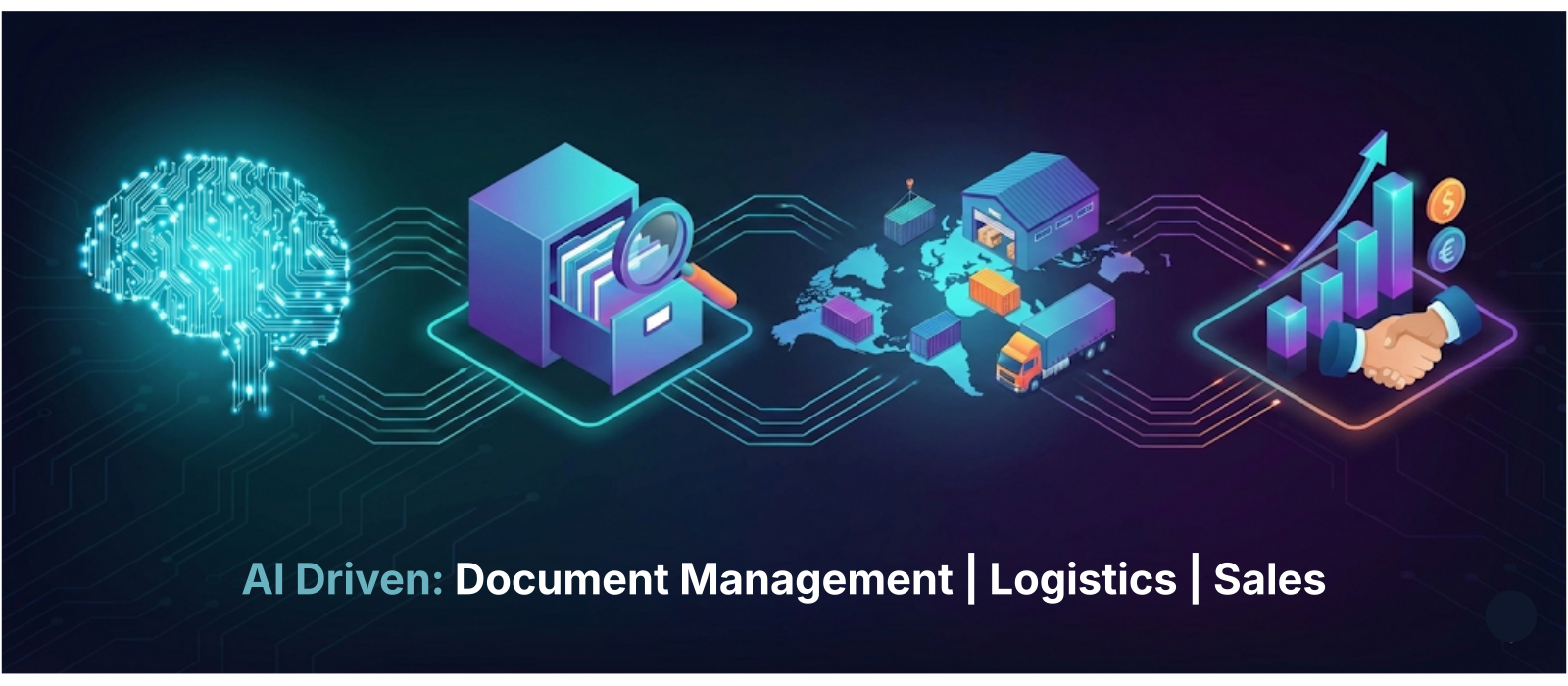
Modern businesses must excel across three interconnected domains to remain competitive. Each pillar reinforces the others, creating a synergistic ecosystem where improvements in one area cascade throughout the organisation.
Document Management
Intelligent capture, classification, and retrieval of business-critical documents using machine learning and natural language processing.
Logistics Optimisation
Predictive analytics and autonomous decision-making for supply chain visibility, route optimisation, and demand forecasting.
Sales Intelligence
AI-powered customer insights, predictive lead scoring, and automated engagement strategies that maximise conversion rates.
AI-Powered Document Management: Beyond Digital Filing
Traditional document management systems functioned as digital filing cabinets—marginally better than paper, but still requiring significant human intervention for classification, retrieval, and processing. Modern AI-driven systems fundamentally reimagine this paradigm.
Intelligent Document Processing (IDP)
Contemporary IDP solutions leverage computer vision, natural language understanding, and machine learning to automatically:
- Extract structured data from unstructured documents (invoices, contracts, receipts)
- Classify documents by type, priority, and required action
- Validate information against business rules and external data sources
- Route documents to appropriate stakeholders based on content analysis
- Generate insights from document patterns and trends
Efficiency Breakthrough
Organisations implementing AI-powered document processing report 65-80% reductions in manual data entry requirements. What previously required dedicated data entry teams now happens automatically in seconds, with error rates below 1% after proper training and validation protocols are established.
Semantic Search and Knowledge Discovery
Traditional keyword-based search systems fail when users don’t know exact terminology or when relevant information exists across multiple documents. AI-enabled semantic search understands context, synonyms, and relationships between concepts.
This capability transforms institutional knowledge from scattered files into a queryable knowledge graph. New employees can quickly access relevant precedents, compliance teams can identify potential issues before they escalate, and executives can make informed decisions based on comprehensive historical context.
Logistics in the Age of Predictive Intelligence
Supply chain management has evolved from reactive problem-solving to proactive optimisation. AI systems now predict disruptions before they occur, optimise routes in real-time, and automatically adjust inventory levels based on demand signals imperceptible to human analysts.
Demand Forecasting and Inventory Optimisation
Machine learning models analyse historical sales data, seasonal patterns, economic indicators, social media sentiment, and dozens of other variables to predict future demand with remarkable accuracy. This enables:
- Reduced stockouts without excessive inventory carrying costs
- Optimised warehouse space allocation based on predicted turnover
- Dynamic pricing strategies that maximise revenue while clearing inventory
- Supplier relationship management based on predicted needs rather than reactive ordering
Autonomous Route Optimisation
Traditional route planning relied on static algorithms and periodic updates. AI-powered logistics systems continuously optimise routes based on:
- Real-time traffic conditions and weather patterns
- Historical delivery success rates by location and time
- Driver performance characteristics and preferences
- Customer delivery preferences and availability patterns
- Cost optimisation across fuel, labour, and maintenance factors
The result is typically 15-25% improvement in delivery efficiency, significant fuel cost reductions, and enhanced customer satisfaction through more reliable delivery windows.
Sales Transformation Through Predictive Analytics
Sales has traditionally been viewed as an art—dependent on relationship-building, intuition, and persuasive communication. AI doesn’t replace these human elements; instead, it provides sales professionals with unprecedented insights that amplify their effectiveness.
Predictive Lead Scoring
Machine learning models analyse hundreds of behavioural signals, demographic factors, and engagement patterns to predict which prospects are most likely to convert. This enables sales teams to:
- Prioritise outreach to high-probability prospects
- Customise messaging based on predicted pain points and motivations
- Time engagement for maximum receptivity
- Allocate resources efficiently across the sales pipeline
Organisations implementing predictive lead scoring typically see 20-40% increases in conversion rates and significant reductions in wasted sales effort on low-probability prospects.
Automated Engagement and Nurture Campaigns
AI-powered marketing automation goes far beyond scheduled email sequences. Modern systems:
- Analyse engagement patterns to determine optimal content and timing
- Generate personalised content based on prospect behaviour and preferences
- Automatically adjust campaigns based on performance data
- Identify buying signals that trigger timely sales intervention
- Maintain engagement during long sales cycles without manual oversight
This creates a seamless experience where prospects receive relevant, timely information that guides them through the buyer’s journey without feeling like they’re interacting with automated systems.
Implementation Considerations and Best Practices
Data Quality and Preparation
AI systems are only as effective as the data they’re trained on. Organisations must invest in:
- Data cleaning and standardisation protocols
- Validation processes to ensure accuracy
- Ethical considerations around data usage and privacy
- Ongoing maintenance as business requirements evolve
Change Management and Adoption
The primary obstacle to AI implementation isn’t technical—it’s cultural. Successful organizations:
- Communicate clear value propositions to affected stakeholders
- Provide comprehensive training on new systems and workflows
- Celebrate early wins to build momentum and buy-in
- Address concerns about job displacement with retraining programs
- Iterate based on user feedback rather than implementing monolithic systems
Integration with Existing Systems
AI capabilities must integrate seamlessly with existing enterprise resource planning (ERP), customer relationship management (CRM), and warehouse management systems (WMS). This requires:
- API-first architecture that enables communication between systems
- Data synchronisation protocols to maintain consistency
- Fallback mechanisms when AI predictions require human review
- Audit trails for compliance and troubleshooting purposes
The Competitive Imperative
Organisations delaying AI adoption face increasing competitive disadvantages. As early adopters establish data advantages, their AI systems improve faster than competitors can catch up. This creates a “flywheel effect” where:
- Better data enables better predictions
- Better predictions create better outcomes
- Better outcomes generate more data
- The cycle accelerates competitive advantage
The window for catching up narrows as the technology matures and first-movers establish market dominance.
Future Trajectories
Several emerging trends will further accelerate AI’s impact on business operations:
- Multimodal AI systems that process text, images, audio, and video simultaneously
- Autonomous decision-making with minimal human oversight for routine operations
- Explainable AI that provides transparent reasoning for predictions and decisions
- Edge computing integration enabling AI capabilities without cloud connectivity
- Quantum computing applications for optimisation problems currently intractable
Organisations that establish AI capabilities today position themselves to rapidly adopt these emerging technologies as they mature.
Frequently Asked Questions About AI Security
Conclusion
The integration of artificial intelligence into document management, logistics, and sales operations represents one of the most significant business transformations of the past decade. Organisations that successfully navigate this transition will establish competitive advantages that compound over time.
The question is no longer whether to adopt AI, but how quickly and comprehensively organisations can transform their operations. Those that act decisively today will define the competitive landscape for the next generation of business.
The future belongs to organizations that view AI not as a technology initiative, but as a fundamental reimagining of how work gets done.
Ready to export? Let's talk.
Whether you're an experienced exporter looking for better documentation support or a grower making your first international shipment — let's talk.