- Logistics Management
- Export Compliance
- Risk Mitigation
The Invisible Cost of Rough Estimates: Why Container Booking Mistakes Start Before Loading Day
A rough container estimate might seem harmless — until loading day proves you wrong. Here's what every NZ exporter needs to verify before booking, and the checklist that prevents costly last-minute scrambles.
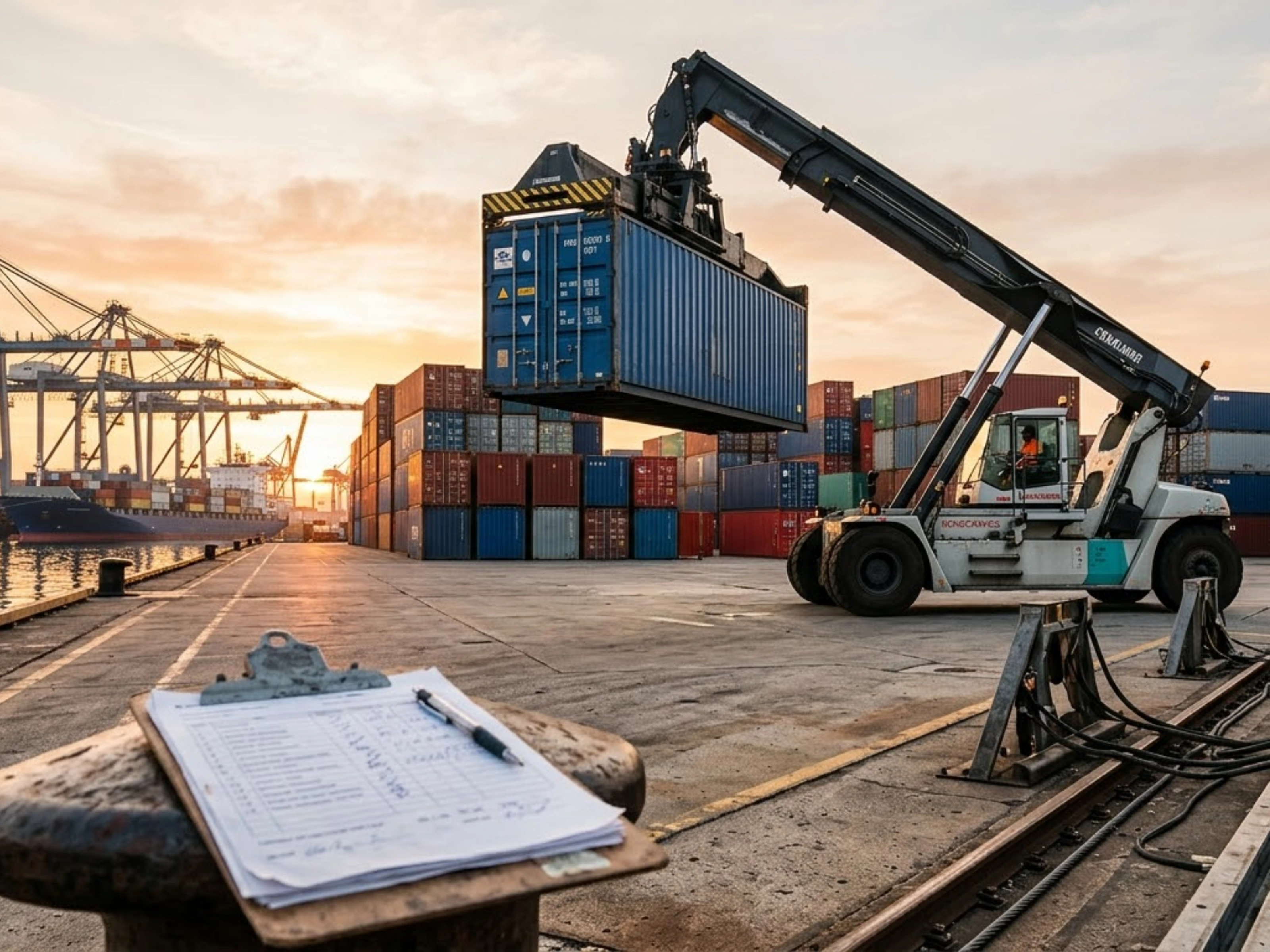
A Lesson Learned the Hard Way
Early in my career, I booked a standard dry container for a load that should have fit — based on volume alone. What I hadn’t accounted for were the real-world variables: packaging dimensions, pallet height, stacking limits, and the actual internal measurements of the container.
Loading day proved me wrong. We scrambled for a high-cube, and the exporter wore the cost of delays and rework.
That single mistake shaped how I approach every container booking today. And it taught me something that still holds true: you cannot book the right container until you truly understand the product. Not just the commodity — but how it’s packed, how it stacks, how it moves, and what it needs to stay compliant and intact in transit.
Why “It Should Fit” Is the Most Expensive Assumption in Export
Dry, reefer, and high-cube containers are not interchangeable — and assumptions like “it should fit” are where things go wrong in export logistics. A container that looks right on a spreadsheet can be completely wrong once you factor in door clearances, airflow requirements, and the realities of how cargo actually loads.
The difference between getting this right and getting it wrong isn’t just a few hundred dollars. It’s demurrage charges, rebooked freight, delayed documentation, and an exporter left questioning whether the whole shipment was managed properly.
Know Your Container
The first anchor is simple: always verify internal dimensions with your freight forwarder or carrier. Specs can vary slightly by manufacturer, and the numbers you find online may not match the exact unit assigned to your booking.
Here are the height specifications that matter most:
| Container Type | Internal Height |
|---|---|
| Standard Dry (20’ / 40’) | 2.39 m – 2.40 m |
| High-Cube Dry (40’ HC) | 2.69 m – 2.70 m |
| Reefer (20’ / 40’) | 2.25 m – 2.29 m |
That 30–45 cm difference between a standard dry and a high-cube is the difference between your pallets fitting and a loading-day crisis. And reefer containers sit even lower — something many first-time exporters of chilled or frozen products don’t realise until it’s too late.
Know Your Load
The container is only half the equation. Before you book, you need to understand exactly what you’re putting inside it — and how it behaves in transit.
Pallet type matters. Euro and ISO pallets have different footprints, which changes your floor plan and total unit count. Confirm your standard before you start calculating.
Door clearances are the real limit. Your load must clear the door opening, which is typically lower than the internal ceiling height. The door header — not the internal roof — determines your maximum stack height.
Never assume cartons can double-stack. Stacking past the rated limit leads to crushed cargo and, in the worst case, total loss. Always check the carton’s box compression test (BCT) rating against the actual weight it needs to bear.
Packaging type changes everything. Cartons, drums, pails, sacks, and IBCs all load differently and have different lashing and bracing requirements. A load plan for cartons on pallets looks nothing like one for drums.
Reefer airflow is non-negotiable. For any primary export in a refrigerated container, airflow through the T-floor is what keeps your product at temperature. Blocking it — by packing cargo directly against reefer walls or over the air discharge — risks total product loss. This is one of the most common and most costly mistakes in New Zealand’s chilled and frozen export supply chains.
The 5-Point Accuracy Audit: Check Before You Book
I use this checklist before confirming any container booking. It takes five minutes and has saved countless hours of rework.
-
Calculate from internal specs. Are your volume and height calculations based on the container’s internal dimensions — not the external ones listed on the shipping line’s marketing page?
-
Verify door header clearance. Does the total stack height (pallet base + product + any required air gap) actually fit under the door opening? The door is always shorter than the ceiling.
-
Respect the reefer red line. If you’re shipping in a reefer, is the cargo packed to allow proper air circulation through the T-floor and around the walls? Any obstruction risks temperature failure.
-
Factor in internal obstructions. Have you accounted for internal bracing, lashing points, or corrugation ribs that reduce usable width? The “usable” space inside a container is always less than the published internal dimensions.
-
Confirm VGM and road limits. Is the final load weight accurate and within both the shipping line’s container weight limit and the road transport regulations for your route to port?
Accuracy Over Assumptions
That scramble for a high-cube on loading day was entirely avoidable. Every container booking mistake I’ve seen — and made — comes back to the same root cause: assumptions replacing verification.
If you’re an exporter managing your own freight, run through the checklist above before your next booking. If you’d rather have someone handle the logistics coordination end-to-end — from documentation and compliance through to container planning and freight management — that’s exactly what we do.
Book a Discovery CallReady to export? Let's talk.
Whether you're an experienced exporter looking for better documentation support or a grower making your first international shipment — let's talk.