- Export Compliance
- Logistics Management
- Risk Mitigation
The Real Cost of a Single Documentation Error (And How to Prevent It)
Discover how minor typos in export documents lead to major demurrage charges and customs delays, and how to safeguard your supply chain.
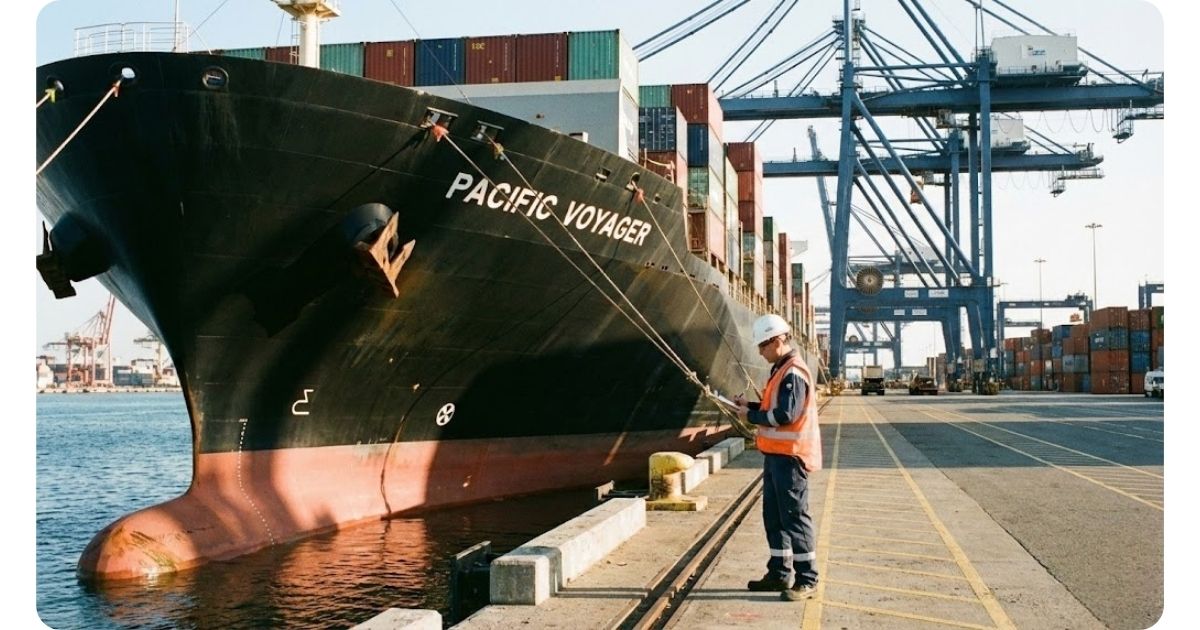
The Midnight Phone Call Every Logistics Manager Dreads
It’s 2:00 AM. Your phone rings. Your freight forwarder is calling from Auckland: “We’ve got a problem—your container’s been held at the port. There’s a discrepancy on the packing list.”
A single typo. One transposed digit in a weight declaration. The container—worth $150,000 of premium New Zealand dairy products bound for Shanghai—is now sitting in a container terminal, accumulating demurrage charges at $350 per day.
This scenario isn’t hypothetical. It happens to New Zealand exporters every week. And the financial consequences extend far beyond the demurrage fees that appear on your invoice.
Understanding the True Financial Impact
When documentation errors halt your shipment, multiple cost centres activate simultaneously—and the charges compound with every passing day.
Demurrage and Detention: The Direct Costs
Let’s define these terms clearly, because many exporters conflate them:
-
Demurrage refers to charges for containers occupying space at the port terminal beyond the “free time” allowance (typically 3-7 days). Current Auckland port rates: $250-$400 per container per day.
-
Detention applies when containers leave the port but aren’t returned to the shipping line within the agreed timeframe. Rates: $150-$300 per container per day.
These charges aren’t negotiable. They begin accruing the moment your free time expires, and they compound daily—weekends and public holidays included.
The Hidden Cascade of Consequences
Beyond the obvious port charges, documentation errors trigger a cascade of additional costs:
-
Customer penalties: Your buyer imposes late delivery penalties stipulated in the purchase agreement. For time-sensitive perishables, this can mean 20-30% price reductions.
-
Storage and handling: Refrigerated containers (reefers) for frozen meat or chilled produce accumulate power charges of $50-$100 per day on top of demurrage.
-
Re-documentation fees: Correcting errors requires amended Bills of Lading, revised commercial invoices, and potentially new phytosanitary certificates. Costs: $500-$2,000 per incident.
-
Customs examination costs: Discrepancies often trigger mandatory physical inspections. Container unpacking, re-packing, and customs officer fees: $1,500-$5,000.
-
Relationship damage: The cost you can’t calculate—your buyer’s lost confidence, your freight forwarder’s increased scrutiny of your future shipments, and your bank’s heightened risk assessment when you need trade finance.
A University of Auckland supply chain study found that the total cost of a single documentation error averages 5-7 times the visible port charges. A $1,400 demurrage bill typically represents $7,000-$10,000 in total impact.
The Most Common (and Costly) Documentation Errors
After reviewing hundreds of delayed shipment cases, certain errors appear repeatedly. Recognising these patterns is the first step toward prevention.
Inconsistent Measurements Across Documents
The most frequent error: weight or quantity discrepancies between documents.
Example scenario:
- Packing List shows “12,500 kg Net Weight”
- Bill of Lading states “12.5 MT” (correct, but formatted differently)
- Commercial Invoice lists “12,485 kg” (actual weighed amount)
Chinese customs systems flag this as a discrepancy. The shipment is held for verification. Your buyer receives notification of the delay. Demurrage begins accumulating.
Prevention principle: Establish a single source of truth for measurements. All documents must reference the same official weight from your certified scale ticket, formatted identically across all documents.
Incorrect Harmonised System (HS) Codes
HS codes determine tariff rates, import quotas, and licensing requirements. An incorrect code can result in:
- Misclassification penalties (up to 30% of shipment value in some jurisdictions)
- Denied entry if the wrong code indicates prohibited goods
- Loss of preferential tariff treatment under free trade agreements
Common example: Confusing HS 0406.10 (fresh cheese) with 0406.90 (other cheese). The tariff difference entering Japan: 22.4% versus 29.8%. On a $100,000 shipment, that’s a $7,400 difference—plus penalties for misclassification.
Prevention principle: Verify HS codes with destination country customs authorities, not just your freight forwarder’s guess. When in doubt, request a binding tariff classification ruling before shipping.
Mismatched Product Descriptions
Customs authorities compare product descriptions across Commercial Invoices, Packing Lists, and Certificates of Origin. Inconsistent terminology triggers audits.
Example:
- Commercial Invoice: “Frozen Lamb Legs, Bone-in”
- Certificate of Origin: “Frozen Sheep Meat”
- Phytosanitary Certificate: “Lamb Carcasses”
Each description is technically correct, but the inconsistency suggests document fraud—a red flag that guarantees customs examination.
Prevention principle: Standardise product descriptions in a master SKU database. Use identical terminology across all export documents for each product line.
Date Inconsistencies and Expired Certificates
Phytosanitary certificates, health certificates, and Certificates of Origin have strict validity periods. A certificate dated after the Bill of Lading is impossible—goods can’t be certified before they’re shipped. Yet this error appears with surprising frequency when documents are prepared retroactively.
Similarly, many markets require certificates issued within 14 days of shipment. A valid certificate that exceeds this window is treated as expired.
Prevention principle: Establish a documentation timeline that ensures certificates are obtained before the shipping deadline, with sufficient buffer for unexpected delays.
The Cost-Benefit Reality: Specialists vs. Self-Management
Here’s the calculation that every CFO should understand:
Cost of professional export documentation management: $150-$400 per shipment, depending on complexity.
Cost of a single documentation error: $7,000-$15,000 average total impact (including hidden costs).
Industry error rate for self-managed documentation: 8-12% of shipments experience some form of documentation delay or discrepancy, according to International Chamber of Commerce trade data.
The mathematics:
If you manage 100 shipments per year internally, you can expect 8-12 documentation incidents. At $10,000 average cost per incident, your annual “hidden tax” from documentation errors: $80,000-$120,000.
Professional documentation management for those same 100 shipments: $15,000-$40,000 annually.
The cost of having a specialist handle your export documentation isn’t an expense—it’s a risk mitigation investment with an ROI of 200-600%.
The Libretto Difference: Precision as Standard
Libretto’s documentation specialists bring three critical advantages that in-house staff rarely possess:
Export Document Experts
Our team maintains direct liaison relationships with Ministry for Primary Industries offices. We understand current interpretation of regulations—not just what’s written in guidance documents, but how MPI officers are actually applying rules this month.
This matters because regulatory interpretation evolves. The phytosanitary certificate wording that was acceptable in June may be insufficient by September as MPI updates protocols in response to overseas market changes.
Multi-Market Regulatory Knowledge
We specialise in New Zealand’s key export destinations: China, USA, European Union, Japan, South Korea, and Australia. Each market has unique requirements—and those requirements change frequently.
Your logistics coordinator can’t possibly track regulatory updates across 50+ export destinations. We do this full-time. When China’s General Administration of Customs issues new cold chain documentation requirements at 3:00 PM on Friday, we’ve updated our systems and informed affected clients by 5:00 PM.
Pre-Submission Verification Protocols
Every document package undergoes systematic verification before submission:
- Cross-document consistency check using automated comparison tools
- HS code verification against current tariff databases for destination country
- Certificate validity confirmation including date logic verification
- Regulatory compliance audit against current destination country requirements
- Final human review by certified trade documentation specialist
This multi-layer process catches errors before they reach customs authorities. Our error rate: 0.3%—and those rare incidents are caught and corrected during in-transit document review, before goods reach the destination port.
The Peace-of-Mind Value Proposition
Beyond the financial calculations, consider the operational reality:
With self-managed documentation:
- Your operations manager loses 6-8 hours per week managing export paperwork
- Your team experiences high stress around shipping deadlines
- You worry about whether documents are compliant until customs clearance is confirmed
- Errors disrupt your relationship with buyers and freight forwarders
- Your reputation is at risk with every shipment
With Libretto managing your documentation:
- Your operations manager focuses on production and quality—their core expertise
- Document preparation becomes a background process requiring minimal input from your team
- You receive proactive alerts about regulatory changes affecting your products
- Errors are caught before submission, not discovered at customs
- Your buyers recognise you as a reliable supplier who never causes documentation delays
One client—a Southland lamb exporter—described the transition: “We used to say ‘fingers crossed’ every time we shipped. Now we say ‘it’s handled.’ That mental shift is worth more than the cost savings.”
Take Action: Start with a Compliance Check
If you’re managing export documentation internally, we recommend starting with a compliance audit rather than immediately outsourcing your entire documentation workflow.
Our Compliance Check service reviews your last five shipments’ documentation packages and provides:
- Identification of recurring error patterns
- Assessment of documentation practices against current MPI and destination country requirements
- Specific recommendations for process improvements
- Cost-benefit analysis for your documentation management options
The Compliance Check typically reveals 3-5 high-risk practices that exporters weren’t aware they were engaging in. Many clients implement our recommendations and significantly reduce error rates before deciding whether to fully outsource their documentation.
Not sure which documents your next shipment requires? Our guide to export documentation from New Zealand covers every document category — from commercial invoices to MPI certificates and LC compliance.
Ready to eliminate documentation errors from your export operations?
Request a Compliance Check today. We’ll review your documentation practices and provide a clear assessment of your risk exposure—with no obligation to engage our ongoing services.
Request Your Compliance Check →
Your next shipment doesn’t need to be the one that costs you $10,000 in avoidable delays.
About Libretto
Libretto specialises in export documentation and MPI compliance services for New Zealand’s primary industries. Our team of certified trade documentation specialists ensures your products reach international markets without delays, penalties, or documentation rejections.
We handle everything from phytosanitary certificates to complex Certificate of Origin requirements across multiple free trade agreements. Our clients ship with confidence, knowing their documentation is precise, compliant, and professional.
Ready to export? Let's talk.
Whether you're an experienced exporter looking for better documentation support or a grower making your first international shipment — let's talk.